How to Choose the Right Measuring & Marking Tools in the UAE for Carpentry, Layout, and Jobsite Work
Kseibi· 2026年8月20日· 8 min read
The right measuring or marking tool depends on the job: squares for angle layout, chalk lines for long straight lines, contour gauges for copying shapes, and calipers for precise dimensions. In UAE conditions, prioritise clear graduations, durable materials, and the tool format that matches how you actually work.
What Are You Measuring or Marking? Start With the Job, Not the Tool
If you choose by tool name alone, it is easy to buy the wrong thing. The better approach is to start with the kind of task you do most often. For square cuts, 90-degree layout, shelving, joinery, and general carpentry marking, a carpenter square is usually the most useful everyday option. For larger timber layout and wider framing work, a framing square gives you more reach. For long straight reference lines across floors, walls, boards, or sheet material, a chalk line is faster than any square. For copying skirting, pipes, tile edges, trims, or any irregular profile, you need a contour gauge. And for checking small parts, thickness, inside or outside dimensions, or fitting tolerances, a vernier caliper is the right tool.
That also answers the most common buying question: no single measuring and marking tool does all jobs well. A square handles angle layout, a chalk line handles distance marking, a contour gauge handles shape transfer, and a caliper handles precision measurement. Buy the one that matches the errors you cannot afford to make in your actual work.
Key Features That Actually Matter: Accuracy, Readability, Size, and Material
For these tools, the decisive specs are not complicated, but they do affect daily usability. First is readability. In UAE conditions, bright light and dusty handling make clear graduations more important than buyers often expect. Tools with ruled graduations, contrasting marking colours, or an LCD readout are easier to trust when you are working quickly. A square with metric/imperial graduations is especially practical if you work across drawings, site practices, or materials that use both systems.
Second is size. A 10-inch or 250 mm square is easier to carry and better for cabinet work, trim, and day-to-day layout. A larger square gives better reference over longer edges and larger stock, which matters in framing or wider boards. The same logic applies to contour gauges: a 250 mm gauge is easier for tight work and smaller profiles, while a 500 mm version is more useful when the shape to copy is wider.
Third is material and finish. Aluminium keeps a square light and easy to handle. Tool steel typically gives a more rigid feel for repeated layout work. ABS housings make sense on chalk lines and contour gauges because they reduce weight and suit frequent handling. A chrome-plated or hardened beam on a caliper matters because precision tools need surfaces that stay smooth and legible over time.
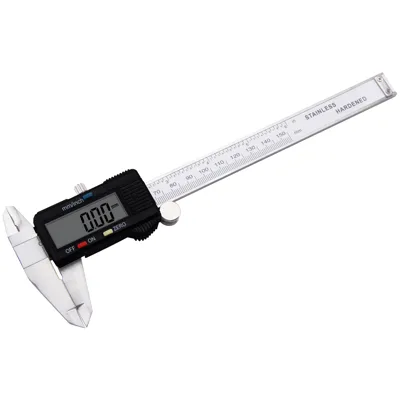
Finally, think about how the measurement is read. A digital vernier caliper is easier to read quickly and lets you zero the display with a button, which is helpful when comparing offsets or step measurements. A mechanical dial style can suit users who prefer non-digital reading, but here the only listed precision details are on the digital 0-150 mm / 6 inch model, so that is the clearer choice if you want a known specification.
Which Tool Fits Which Task: Squares, Chalk Lines, Contour Gauges, and Calipers
Squares for carpentry and layout
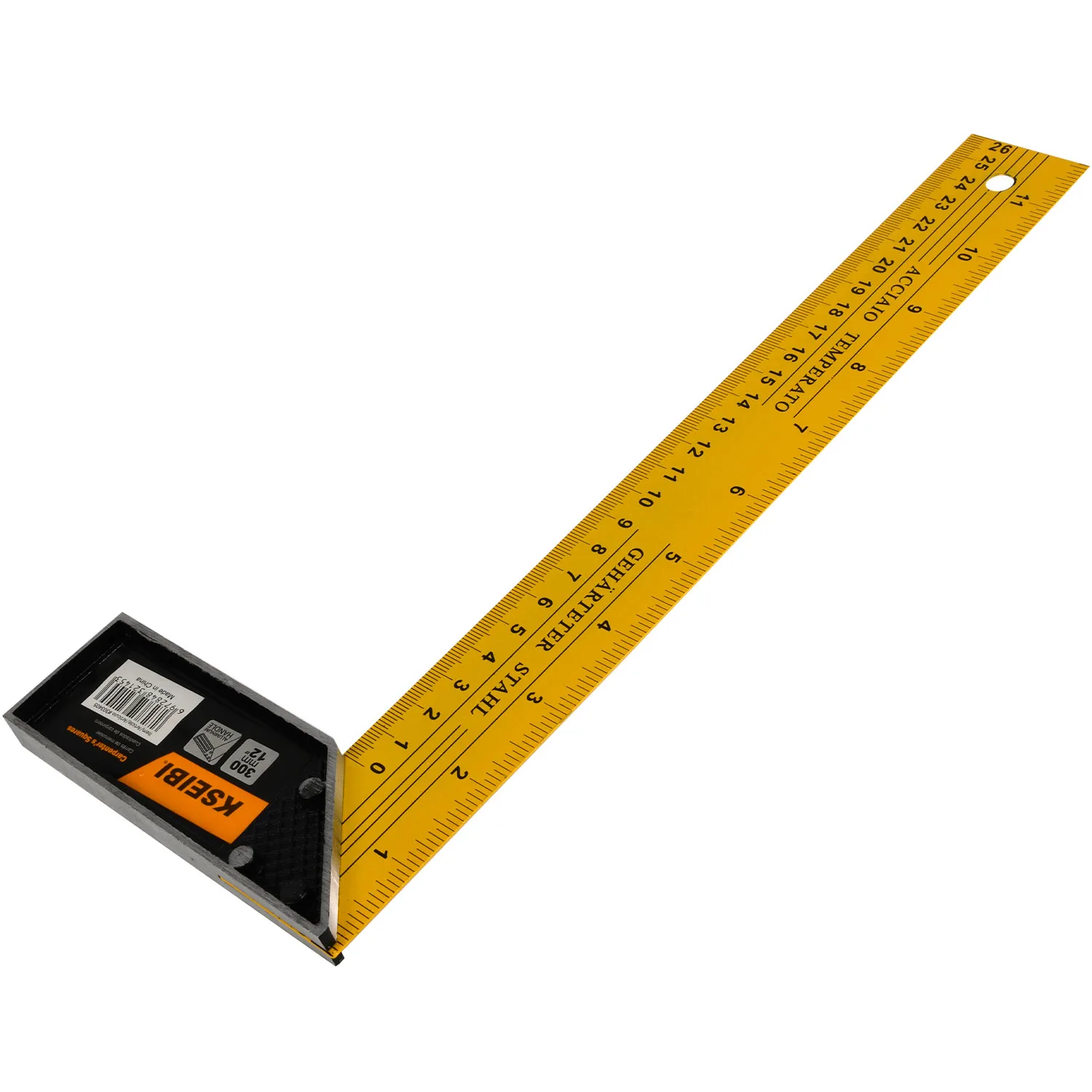
For most buyers searching measuring tools for carpentry UAE or marking tools for woodworking UAE, the decision starts with the square. The Kseibi Carpenter Square with Metric/Imperial Graduations is the most broadly useful option because it combines a 90-degree layout format with dual-scale markings and multiple sizes from 10 inch / 250 mm up to 16 inch / 400 mm. That makes it easier to match the tool to your material size and your preferred working style.
The Aluminium Square is a lighter alternative, and its integrated spirit level adds convenience when you are checking simple level references as well as marking. That does not replace a dedicated long level, but it can reduce tool switching for quick checks on small layout tasks.
When is a framing square better than a carpenter square? Use a framing square when your work is physically larger and you want longer legs for registration against edges. The listed Kseibi Carpenter Framing Square comes in 8 inch x 12 inch and 16 inch x 24 inch sizes, with an L-square framing format, high quality tool steel, and yellow markings with black graduations. That combination suggests easier reading against a darker body and better suitability for broad framing layout than a compact bench square.
Chalk lines for long straight marking
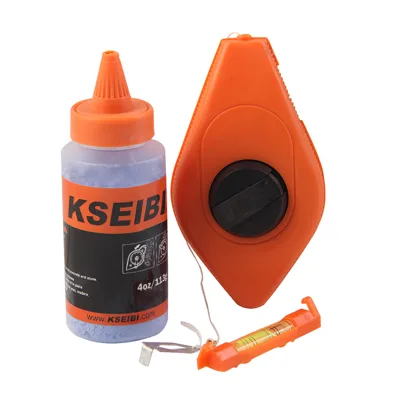
A chalk line is the right answer when the line is too long for a square to mark efficiently. The KSEIBI Chalk Line Set includes a 15 m reel, spirit level, and blue marking powder in the set. For flooring, wall lines, board alignment, or general site layout, that is much faster than trying to join short pencil marks. If your question is whether a chalk line set is enough, the practical answer is yes for initial use because this one includes powder. But if you use it often, refill powder becomes part of the real ownership cost and convenience.
The available refill option is Kseibi Chalk Powder Refill 115 g, listed in blue and red. If you want to keep the line tool working without downtime, buying refill powder makes sense where available. Blue is the clearly listed powder colour in the set itself, so choose refill colour based on your own visibility preference and surface contrast needs.
Contour gauges for shape copying
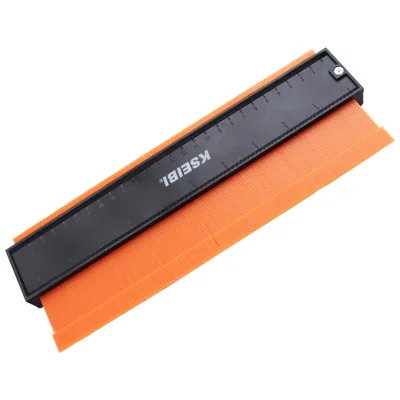
If your real problem is fitting around irregular edges, a square or chalk line will not solve it. The Kseibi ABS Contour Gauge is meant for transferring shapes, and that is exactly what you want for pipes, trims, corners, skirting, tile edges, and uneven profiles. The two listed lengths, 250 mm and 500 mm, matter because wider profiles need a longer gauge to capture more of the shape in one pass. For smaller joinery and finishing work, 250 mm is easier to control.
Calipers for precision checking
Use a caliper when a tape or square is not precise enough. The Kseibi Digital Vernier Caliper covers 0-150 mm / 6 inch and uses a digital LCD with OFF, ON, and ZERO controls. In buying terms, that means quicker reading, easier unit-to-unit comparison through zeroing, and better suitability for repeated checks on parts, thicknesses, diameters, or fitting dimensions. If you are comparing digital vernier caliper 0-150mm options to dial models, the digital one is the easier recommendation here because its reading method and controls are explicitly listed.
Tool type
Best for
Key listed features
Main trade-off
Carpenter square
General 90-degree layout, joinery, shelving, woodworking
Metric/imperial graduations, 10-16 inch sizes, tool steel
Shorter reach than a framing square on large work
Aluminium square
Light-duty layout with quick level checks
Aluminium body, ruled graduations, integrated spirit level, 10 inch / 250 mm
Less reach than larger framing formats
Framing square
Larger framing and wide stock layout
L-square shape, 8x12 and 16x24 sizes, tool steel, contrasting graduations
Less compact for everyday carry
Chalk line set
Long straight lines on walls, floors, boards, sheet material
15 m reel, ABS housing, spirit level, includes powder
Not for precise small measurements or angle work
Contour gauge
Copying irregular profiles and edges
ABS body, 250 mm and 500 mm options
Measures shape transfer, not exact numeric dimensions
Digital vernier caliper
Precision checking of parts and dimensions
0-150 mm / 6 inch, LCD, zero function, hardened stainless-marked beam
Better for small precision work, not layout marking
Product Comparison: Choosing Between the Available KSEIBI Options
If you want one general-purpose layout tool, the metric/imperial carpenter square is the strongest all-rounder because it covers the most common carpentry marking jobs and works whether your reference dimensions are in millimetres or inches. If you work mainly on larger timber, sheet positioning, or wider edge registration, the framing square is the better shape and size. If you need portability and occasional level checking in one hand tool, the aluminium square stands out because of the integrated spirit level.
For line marking, the 15 m chalk line set is the practical choice because it is a complete starter kit rather than just a refill accessory. The refill powder only makes sense if you already have a line reel or expect regular use. For profile transfer, choose contour gauge length by the width of the shapes you typically copy rather than by a vague assumption that larger is always better. And for exact dimensions, the digital caliper is the clearest choice among the listed precision tools because it is the one with defined measuring range and display type.
UAE Buyer Considerations: Dust, Heat, Readability, and Jobsite Durability
In the UAE, these tools are less about voltage and more about visibility and resilience. Since these are mainly hand tools, 220-240V is not a deciding factor here. What matters more is whether markings remain easy to read under strong sunlight, whether the body material suits rough handling, and whether the tool can be wiped clean after dusty work without becoming difficult to use.
Black bodies with contrasting yellow graduations can be easier to read than low-contrast markings outdoors. Ruled graduations are preferable to vague printed references because quick visual alignment matters on site. ABS housings are useful where the tool will be handled often or carried in mixed tool bags. For calipers, dust matters more because sliding precision tools perform best when kept cleaner than general layout tools. If your site is especially dusty, store the caliper separately instead of letting it rattle loose with masonry dust and fasteners.
For UAE trade work, choose the simplest tool that gives you the accuracy you actually need. Simpler hand tools usually tolerate dust and frequent handling better than precision tools, while a caliper should be reserved for tasks where fine measurement is genuinely necessary.
Clear Recommendations by Use Case: Best Pick for Layout, Marking, Tracing, and Precision Checking
For everyday carpentry layout: choose the Kseibi Carpenter Square with Metric/Imperial Graduations. It is the most flexible option for right-angle marking and mixed measurement systems.
For larger framing work: choose the Kseibi Carpenter Framing Square when stock size and layout area are bigger and you want longer reference legs.
For quick, light layout with simple level checking: choose the Kseibi Aluminium Square.
For long straight jobsite lines: choose the KSEIBI Chalk Line Set with Spirit Level, 15 m. It is the right tool for speed over distance.
For copying odd shapes and edges: choose the Kseibi ABS Contour Gauge, selecting 250 mm or 500 mm based on the width of the profile you need to transfer.
For precision checking: choose the Kseibi Digital Vernier Caliper 0-150 mm / 6 inch if you need exact small measurements and easy readout.
What measuring tool should I buy for general carpentry layout in the UAE?
For general carpentry layout, a carpenter square with metric/imperial graduations is usually the most versatile choice because it handles 90-degree marking and works with both measurement systems.
Should I choose metric, imperial, or metric/imperial graduations?
Choose metric/imperial if you regularly switch between drawings, materials, or teams using different systems. If all your work is in one system, a single-scale tool can be simpler, but dual-scale gives more flexibility.
When should I choose a chalk line set instead of a square?
Choose a chalk line when you need to mark long straight lines across floors, walls, boards, or sheet material. A square is better for shorter, more controlled angle and edge layout.
Is a chalk line set enough, or do I also need refill powder?
A chalk line set that includes powder is enough to start using immediately. Refill powder becomes useful if you use the tool regularly and want to avoid stopping when the first fill runs out.
What tool should I use to copy odd shapes or curves?
Use a contour gauge for irregular profiles such as pipes, trims, corners, and skirting. It transfers the shape so you can mark it onto your material more accurately.
Do I need a digital vernier caliper or a dial vernier caliper for precision measurements?
A digital vernier caliper is usually easier to read quickly and easier to zero for comparison work. Based on the listed options here, the digital 0-150 mm / 6 inch model is the clearer precision choice.