How to Choose a Cement Mixer in the UAE | Kseibi UAE Website
دليل شراء
How to Choose the Right Cement Mixer for Mortar, Concrete, and Small Jobsite Work in the UAE
Kseibi· 10 أكتوبر 2026· 6 دقيقة قراءة
Choose a portable mixer when mobility and smaller repeated batches matter most, and choose a 200L electric mixer when your site needs larger, steadier output. In the UAE, power compatibility, wheel-mounted movement, and practical daily workload should drive the final decision.
How to choose the right cement mixer for UAE work
The fastest way to decide is this: choose a compact portable mixer if your work is mostly repair batches, mortar, mud, patching, or smaller concrete jobs where moving the machine easily matters. Step up to a 200L electric cement mixer if you need larger batches, more continuous output, and fewer stops to reload on site. In the UAE, that decision should also be filtered through power compatibility, heat, dust, and how often the mixer will be used in a working week.
What job are you really buying the mixer for?
Buyers often focus on the biggest drum they can afford, but the better approach is to match the mixer to the real work. A cement mixer for mortar is not always chosen for the same reason as a cement mixer for concrete UAE site work. Mortar and mud jobs often involve smaller, repeated batches and movement around the property or site. Small concrete pours can still suit a portable unit if volume is limited. But once your work starts demanding repeated larger batches, the time lost refilling a smaller drum becomes the bigger cost.
Choose a smaller portable mixer if your work is mostly maintenance, blockwork support, plaster-related mixing, or short-run repair tasks.
Choose a larger drum mixer if you are regularly mixing for slabs, repeated pours, or jobs where output per batch matters more than compact size.
If multiple workers depend on the mixer, a larger capacity can keep the job moving better by reducing waiting between batches.
If one person needs to move and operate the machine often, wheel-mounted portability and manageable size become more important than maximum drum volume.
Cement mixer specs that actually matter
The two specs that change the buying decision most are drum capacity and motor power. Capacity tells you the scale of work the mixer is built to support. Power tells you how confidently the mixer can keep turning under load. Neither number should be read in isolation.
What drum capacity means in real use
A 4.2 cu ft cement mixer, 5 cu ft cement mixer, and 200L cement mixer sit in different practical categories. The smaller sizes are easier to place, easier to move, and better when you do not want a large machine taking up site space. The trade-off is that you will need more batches to produce the same total volume of mixed material. A 200L drum is more suitable when output matters, because it reduces repeated loading cycles and helps maintain workflow on larger or more frequent jobs.
What motor power means
The listed portable mixers use 3/5 HP and 3/4 HP motors, while the larger electric model uses an 850W motor. For a buyer, the key point is not just the number itself but what it suggests about intended workload. A lower-powered compact mixer can still be the smarter buy when batches are smaller and mobility is more important. A higher-powered larger mixer usually makes more sense for heavier, repeated mixing because the machine is built around larger-capacity site work.
Tilt control and unloading
On the 200L model, the hand wheel tilt matters because larger drums are more awkward to empty accurately without controlled tipping. This becomes more important as batch volume rises. For repeated pours, controlled discharge can help reduce wasted material and operator effort.
Drum speed
The 200L electric mixer lists a drum speed of 29.5r/min. For buyers, drum speed matters less as a headline number than as part of an overall design intended for mixing and turning material consistently. It is useful as a comparison point between similar-sized mixers, but capacity, power supply, and handling are usually the more decisive factors.
Choosing between compact portable mixers and larger drum mixers
Mixer type
Best for
Main advantage
Main trade-off
Relevant models here
4.2 cu ft portable mixer
Small repair work, mortar, mud, occasional concrete
More compact and easier to position
Less batch volume, so more reloads on bigger jobs
KCM 45-120L / KSM 45-120 L
5 cu ft portable mixer
Regular small-site mixing where mobility still matters
Balance of portability and more batch capacity
Still not ideal if you need large continuous output
KCM 55-140 LP
200L electric drum mixer
Larger batches, repeated site use, higher-output concrete or mortar work
Fewer batch cycles and better fit for heavier routine work
Bigger machine needs more space and suitable power access
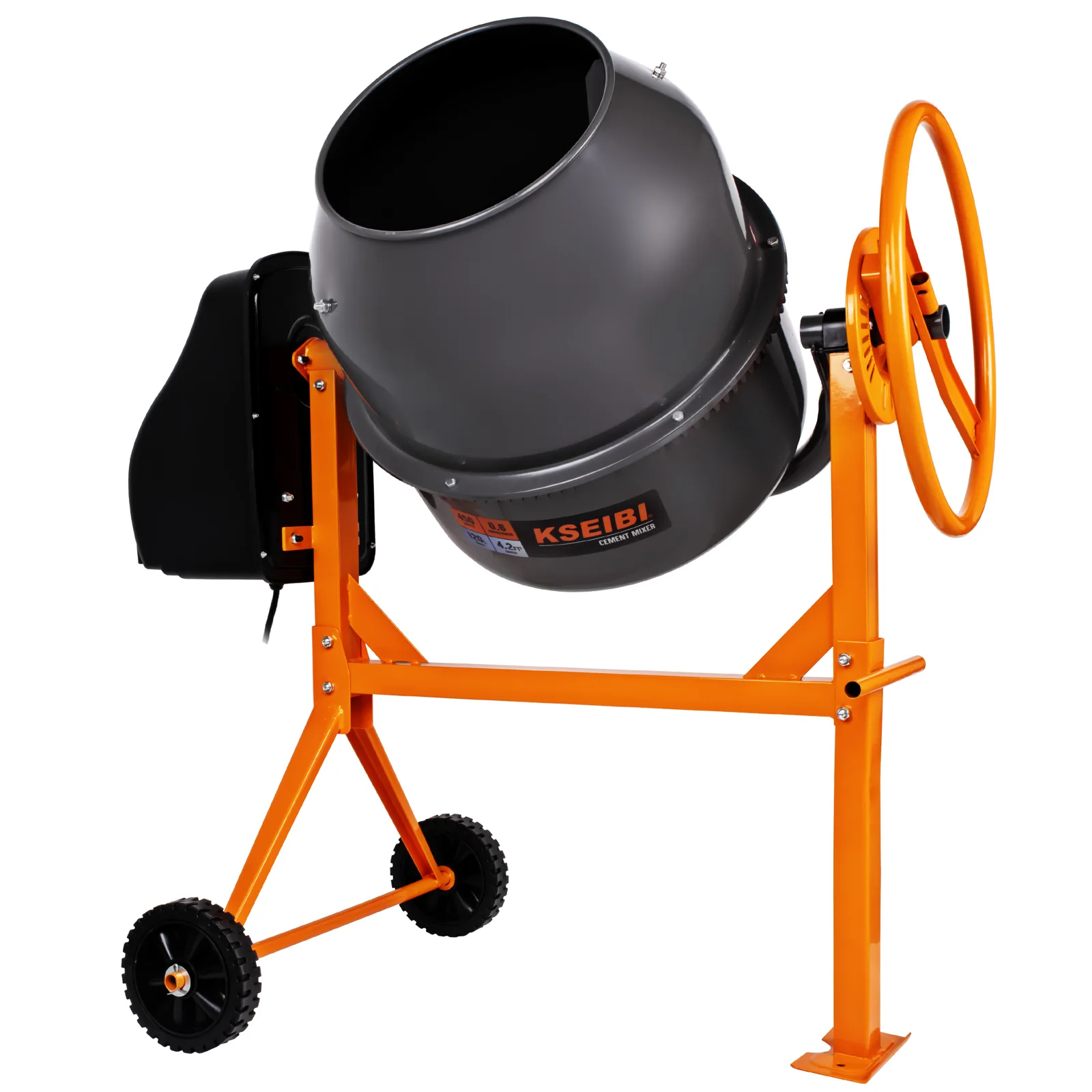
Kseibi 200L 850W Electric Cement Mixer
If you are asking, 'Do I need a small portable mixer or a larger 200L mixer?', the answer usually comes down to whether your problem is movement or output. If the machine needs to be moved around often and your mixing volumes are modest, the portable options fit better. If your crew is spending too much time waiting for the next batch, that points toward the 200L class.
Which mixer fits common UAE jobsite use cases
Mortar and mud for smaller building or repair tasks: a compact portable mixer is usually the better fit because it is easier to relocate and better matched to smaller repeated mixes.
Small concrete jobs where space is limited: a 4.2 cu ft or 5 cu ft mixer can be the practical choice if you do not need high continuous output.
Frequent concrete mixing or multiple larger batches in a day: a 200L electric cement mixer is usually the safer choice because larger drum capacity reduces cycle repetition.
Sites where one machine serves several workers: the 200L class generally makes more sense because batch volume supports steadier workflow.
Jobs that involve moving across villas, compounds, or uneven site areas: wheel-based designs become more useful than fixed-position setups.
UAE buying considerations: power, heat, dust, and mobility
This is where many buying mistakes happen. An electric cement mixer 220-240V compatible model is especially important in the UAE because local mains compatibility is not optional. The Kseibi 200L 850W Electric Cement Mixer explicitly lists 220-240/50-60Hz input voltage, which is the right kind of specification to verify before buying. A plug type H variant is also listed in the product data, which matters for buyers who want a machine aligned with local plug expectations rather than planning immediate adapter changes.
If you are buying for UAE use, always confirm the listed input voltage and plug arrangement before checkout. That matters just as much as drum size.
Heat and dust also affect the decision, even when detailed sealing or duty-cycle figures are not listed. In UAE conditions, repeated commercial use puts more stress on motors, moving parts, and cleanup routines. That means larger capacity can help not only because of output, but because it reduces the number of batch cycles needed to finish the same work. Less repeated loading and emptying can make daily use more manageable.
Mobility should be judged realistically. Wheel-mounted is valuable when the mixer must be repositioned on site rather than living in one fixed spot. The 200L Kseibi mixer is wheel-mounted, and the 5 cu ft portable mixer is also clearly designed around easier movement. When is a wheel-mounted mixer better than a more compact unit? Usually when the site is large enough that moving the machine is unavoidable, but the work volume is also high enough that a larger drum still pays off.
Compact size makes more sense than maximum capacity.
Regular small-site work needing more capacity without jumping to a large machine
5 cu ft portable class
A better middle ground between portability and output.
Frequent batching, larger pours, or commercial-style repeated use
200L electric mixer
Higher-capacity workflow suits heavier and more continuous demand.
Need UAE-ready voltage confirmation
200L electric mixer with 220-240/50-60Hz listing
Power compatibility is clearly stated in the product data.
Need local plug alignment
Plug type H listed variant
Useful for buyers who want to avoid plug mismatch issues.
Which mixer is better for mortar, mud, and concrete mixing? All of the listed mixer types are positioned for those materials, but the right one depends on volume first. For mortar and mud, smaller portable mixers are often the more efficient choice because the jobs tend to suit smaller batches. For concrete, especially when batch demand rises, the 200L machine becomes the more sensible tool.
What should you check for if you plan to use the mixer commercially in the UAE? First, verify voltage compatibility. Second, choose capacity based on realistic daily throughput, not occasional use. Third, consider wheel-mounted handling if the machine will move around active sites. Finally, confirm local availability and support details at time of purchase, because for commercial buyers downtime matters as much as the initial specification.
Do I need a small portable mixer or a larger 200L mixer?
Choose a small portable mixer if your work is mostly repairs, mortar, mud, or smaller concrete batches and you need easier movement. Choose a 200L mixer if you need larger batches more often and want to reduce time lost to repeated reloading.
Is 220-240V power support important in the UAE?
Yes. If you are buying an electric mixer for UAE use, 220-240V compatibility is a key check because it affects whether the machine suits local mains supply. The listed 200L electric model explicitly states 220-240/50-60Hz input voltage.
What does drum capacity mean in real jobsite use?
Drum capacity is mainly about how much material you can mix per batch and how often you need to reload. Smaller drums are easier to handle and position, while larger drums are better when output and fewer batching cycles matter more.
When is a wheel-mounted mixer better than a more compact unit?
A wheel-mounted mixer is better when the machine must be moved around the site regularly and the job is too large for a very compact mixer to stay efficient. It becomes especially useful when you need both mobility and higher batch volume.
Which mixer is better for mortar, mud, and concrete mixing?
The better mixer is the one sized for your batch volume. Portable models usually suit mortar and mud work well because those tasks often use smaller repeated mixes, while a 200L mixer is a stronger fit for larger or more frequent concrete work.
What should I check for if I plan to use the mixer commercially in the UAE?
Check voltage compatibility first, then choose a capacity that matches your real daily workload rather than occasional jobs. Also look at mobility features such as wheels and confirm local availability or support before buying for commercial use.