
How to Choose Fiberglass Mesh Tape in UAE | Kseibi UAE Website
Buying Guide
How to Choose Fiberglass Mesh Tape for Crack Repairs, Joint Reinforcement, and Surface Patching
Kseibi· Aug 22, 2026· 7 min read
Fiberglass mesh tape is the right choice when your repair needs reinforcement across a crack, seam, or patched area, not just surface filling. For most UAE buyers, the main decision is simple: 20 m for small or occasional jobs, 150 m for repeated repairs or longer runs.
Fiberglass mesh tape is a reinforcement material, not a complete repair on its own
If your job involves a crack, a seam, or a patched area that may move slightly or reopen, fiberglass mesh tape is often the right material to add strength across that weak line. It helps a repair hold together better than filler alone because the fiberglass acts like a reinforcing bridge over the problem area. The key point for buyers is that mesh tape is not the patch itself: it supports the repair, but you still need the appropriate filler, jointing, or patching material over it.
For UAE buyers, this makes fiberglass mesh tape especially useful on maintenance jobs where surfaces may see heat, dust, and fast-paced work conditions. Because it is a simple hand-applied material, there are no voltage, charger, or plug concerns. Your real buying decision is simpler: is reinforcement actually needed for the job, and if so, should you buy a 50 mm x 20 m roll or a 50 mm x 150 m roll?
What fiberglass mesh tape is for—and when you need it
Use fiberglass mesh tape when the repair needs support across a line or edge. Typical examples are wall crack repair tape applications, joint reinforcement tape over seams, and fiberglass reinforcement tape over a patched section where the surrounding surface may be slightly weaker than the original. In these situations, mesh tape for cracks can improve the stability of the finished repair because it spreads stress across the taped area instead of leaving the filler to carry all of it by itself.
Choose fiberglass mesh tape when repairing cracks that need reinforcement, not just cosmetic filling.
Use it on seams or joints where two sections meet and the repair benefits from extra support.
Use it over patch repairs when you want the patched area reinforced before finishing.
Do not treat it as a substitute for filler or patching compound; it is part of the repair system, not the whole system.
If your repair only needs a quick surface touch-up with no real weakness underneath, mesh tape may be unnecessary. Buy it when reinforcement matters, not simply because there is a visible mark.
How to choose the right roll size and what the key specs mean
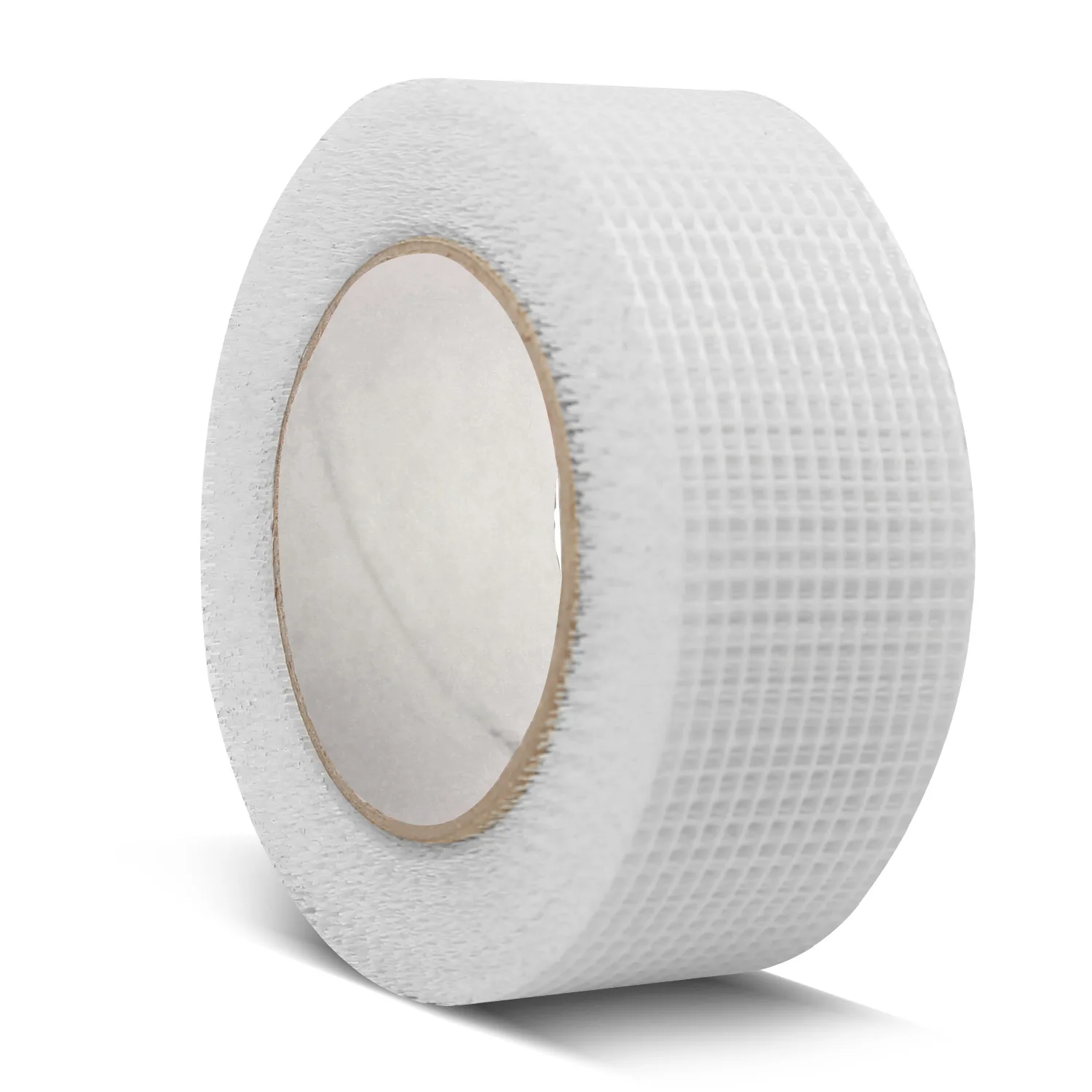
The decisive specifications here are straightforward: material, width, and roll length. KSEIBI’s fiberglass mesh tape is fiberglass, white in colour, and available in 50 mm x 20 m and 50 mm x 150 m options. For the buyer, the most important specification is the length because both versions share the same 50 mm width.
A 50 mm width is a practical general-purpose size for crack repair, seam coverage, and patch reinforcement because it gives enough coverage to span a narrow repair line without becoming awkward to place by hand. In real use, the width matters because it needs to cover the weak area with some overlap on both sides. Since both options are 50 mm wide, the choice is not about different repair types as much as it is about how much work you expect to do.
The difference between 20 m and 150 m is really about job scale, buying efficiency, and handling. A 20 m roll is easier to justify for small home repairs, occasional maintenance, or one room’s worth of cracks and seams. A 150 m roll suits repeated use, longer runs, or maintenance teams that do multiple repairs and want fewer interruptions from changing rolls or reordering stock.
50 mm width: a practical standard width for reinforcing cracks, seams, and patched areas.
20 m length: better when you want to avoid buying excess material for a limited job.
150 m length: better value in usage terms if you handle frequent repairs or long seam runs.
Fiberglass material: appropriate when you specifically need reinforcing mesh rather than a plain surface patch.
Where it works best: crack repair, seams, and patch reinforcement
Fiberglass tape for repair is most useful where a repair line has a reason to reopen. On a crack, the tape helps hold the repair material across the weak line. On a seam, it helps reinforce the joint area instead of relying only on compound. On a patch, it adds support so the patched section is better integrated with the surrounding surface.
This also explains what kinds of jobs mesh tape is better for than a simple patch material. A patch material mainly fills, levels, or covers. Fiberglass mesh tape strengthens the repair zone. If your problem is structural within the repair area rather than only cosmetic at the surface, reinforcement becomes the more important function.
Best for: cracks that need reinforcing, seams between sections, and support over patched areas.
Less suitable as a standalone fix: jobs where you only need surface filling and no reinforcement.
Best bought when the repair has a line, joint, or edge that would benefit from added strength.
How much tape do you need for a typical repair project?
For most buyers, estimating tape need is less about precise mathematics and more about the number of repair lines you expect to cover. If you only have a few isolated wall cracks, a short seam, or one small patching job, the 20 m roll is usually the safer choice because it matches occasional use without tying up money or storage space in surplus material. If you are working across multiple rooms, doing repeated apartment or villa maintenance, or reinforcing many long joints, the 150 m roll is the practical choice.
A useful way to decide is to count how many metres of cracks, seams, or patch edges you realistically plan to tape now, then add some allowance for trimming and handling. If that total is modest, buy the smaller roll. If you know more repairs are coming soon, the large roll reduces the risk of running short in the middle of a longer job.
Option
Best for
Why you would choose it
Trade-off
Fiberglass mesh tape 50 mm x 20 m
Small repairs, occasional maintenance, one-off home jobs
Enough for limited crack repair or seam reinforcement without overbuying
Can run out quickly on larger or repeated jobs
Fiberglass mesh tape 50 mm x 150 m
Long seams, repeated repairs, workshop or maintenance use
Better suited when you need continuous coverage and fewer roll changes
More material to store and manage if your needs are only occasional
UAE buying considerations: heat, dust, storage, and jobsite practicality
In UAE conditions, practical handling matters almost as much as the roll size. Heat can speed up work pace because repair materials may dry quickly, so it helps to have a roll size that matches the amount of work you can complete cleanly. Dust is another real concern: if the tape or the repair area gets contaminated during application, handling becomes less convenient and the process less tidy. That makes storage discipline important even for a simple product like fiberglass mesh tape.
Buy the roll size you are likely to use within a reasonable period rather than storing excess unnecessarily.
Keep the tape stored clean and dry so dust does not make application less practical.
For apartment or villa touch-ups, smaller rolls are often easier to manage and store between jobs.
For workshops or maintenance teams, a longer roll is more efficient if repairs are frequent enough to justify it.
There are no 220-240V, plug, or electrical compatibility issues because this is a hand-applied material.
Local availability matters more than electrical compatibility with this product. If you need to finish repairs on schedule, choosing a roll length that suits the job now can be more important than simply buying the largest option.
What to check before buying if you want tape that is easy to handle and store
Before buying, check three things: whether your repair really needs reinforcement, whether 50 mm width fits the type of crack or seam you are covering, and whether the roll length matches your likely workload. For most buyers, the handling question comes down to this: smaller rolls are easier to keep for occasional use, while larger rolls make more sense only when they will be used regularly.
Pros
Useful for reinforcing cracks, seams, and patched areas
Available in a smaller and a larger roll to match different job scales
Simple hand-applied material with no power or plug concerns
Fiberglass construction suits reinforcement use rather than simple covering
Cons
Not a complete repair solution by itself
A large roll can be excessive for one-off home repairs
Storage cleanliness matters in dusty conditions
Clear recommendation: which roll should you buy?
Buy the 50 mm x 20 m roll if you are a homeowner, tenant, or occasional DIY user dealing with a few cracks, one seam, or a limited patch reinforcement job. It is the sensible choice when you want fiberglass mesh tape for repair without ending up with far more material than you need.
Buy the 50 mm x 150 m roll if you handle repeated maintenance, longer seam runs, or multiple repair areas across villas, apartments, or workshop spaces. It is the better operational choice when continuity matters and you expect to use the tape regularly enough for the larger roll to be practical.
Is fiberglass mesh tape the right choice for my crack repair or seam reinforcement?
Yes, if the repair needs reinforcement across a weak line such as a crack or seam. It is most useful when filler alone may not be enough to support the repair.
Should I buy a 50 mm x 20 m roll or a 50 mm x 150 m roll?
Choose 20 m for small home repairs, occasional maintenance, or a few isolated cracks. Choose 150 m if you expect longer seam runs, repeated repairs, or ongoing maintenance work.
What kinds of jobs is mesh tape better for than a simple patch material?
Mesh tape is better when the repair area needs reinforcement rather than only filling. It is especially useful on cracks, joints, and patched sections that could reopen or stay weak without support.
How much tape do I need for a typical repair project?
That depends on the total length of cracks, seams, or patch edges you plan to cover. A small one-off project usually suits a 20 m roll, while multiple rooms or repeated jobs are more suited to 150 m.
Will this type of tape be practical for UAE jobsite conditions like dust and heat?
Yes, provided you store and handle it cleanly. In UAE conditions, dust control and sensible storage matter, and there are no electrical compatibility concerns because it is hand-applied.
What should I check before buying if I want a tape that is easy to handle and store?
Check whether the repair really needs reinforcement, confirm that 50 mm width suits your job, and choose a roll length that matches how much you will actually use. Smaller rolls are generally easier for occasional users to store and manage.